
How boiling water kills a weed
Water reaches 100°C at sea level. Plant cell walls start to break down at around 50–60°C, and above 70°C the proteins that hold cells together denature almost instantly. Pour water hot enough onto a dandelion or a chickweed and the leaves wilt within minutes. Come back the next morning and they are brown, dry and dead.
This is genuinely how thermal weed control works. It is not folk wisdom. The underlying mechanism, heat-induced cell rupture, is exactly the same one used by every professional hot-water, steam and hot-foam system on the market.
Where boiling water stops working
The problem is not the temperature. The problem is how long that temperature lasts once the water leaves the kettle.
It cools in seconds
A stream of water dropped onto a cool paving slab loses lethal temperature almost immediately. Only the very first fraction of a second delivers the heat that matters.
It never reaches the crown
Perennial weeds, dandelion, dock, plantain, bindweed, store energy in a root crown just below the soil surface. Water runs off before it can conduct heat downward. The visible top dies; the plant regrows.
It doesn't scale
Boiling one kettle covers a couple of square metres. Boiling enough water to treat a supermarket car park, a housing estate or a golf course perimeter is not remotely practical, safe or economic.
It's a burn hazard in public spaces
Carrying an open vessel of boiling water across a pavement is not something a professional grounds team can insure or supervise.
Hot foam: the professional version of the same idea
Hot foam solves every problem on that list without changing the underlying science. Water is heated on board the machine and, at the nozzle, combined with a biodegradable, plant-based foam. The foam is the difference.
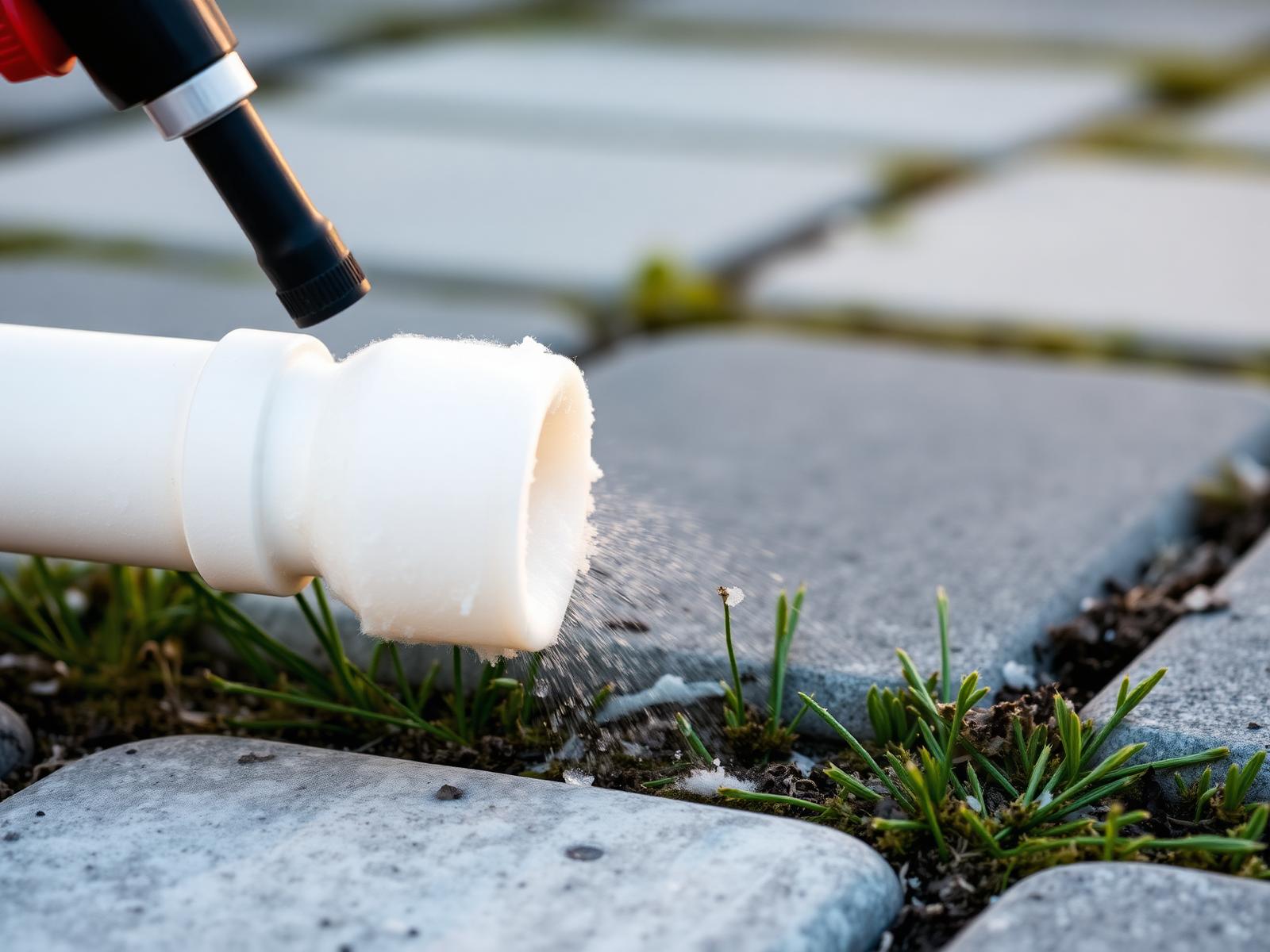
The foam holds the heat
It insulates the heated water against the plant, so lethal temperature is maintained long enough to conduct downward.
The kill reaches the crown
Heat penetrates to the growing point. Root-crown death means the plant does not regrow, independent trials show equivalent or better kill than glyphosate.
It scales
A single Solas machine treats hectares in a shift, run by an operator with basic training.
It's safe on contact
No herbicide, no residue, no re-entry interval. Foam biodegrades in minutes and enters the soil as water.
So, should I use boiling water?
For a couple of weeds between the flags of a domestic patio: yes, a full kettle will do the job on the day. Expect the perennials to come back. For anything with a boundary line, a public liability policy, a budget or a schedule attached to it, boiling water is the wrong tool. The right tool is the same principle, engineered to be deliverable at scale, hot foam.